Hamburg is Germany's second city, its primary port, and one of Europe's most underrated group travel destinations. This is what eight years of guiding it professionally looks like.
Hamburg Messe und Congress generated €140.2 million in revenues in 2024 — a record year. The city has won event bids against London, Vienna, and Istanbul in recent years. For tour operators and event planners who have placed groups in Munich, Berlin, or Frankfurt and have never looked further north, Hamburg represents a genuine programme alternative with lower saturation, higher novelty for returning clients, and comparable infrastructure.
Hamburg is Germany's second-largest city, its primary port, and the home of Airbus, Unilever DACH, Beiersdorf, and the Otto Group. Its corporate base generates sustained demand for business travel and social programming — and its position on the North Sea keeps group itinerary costs competitive with central European capitals.
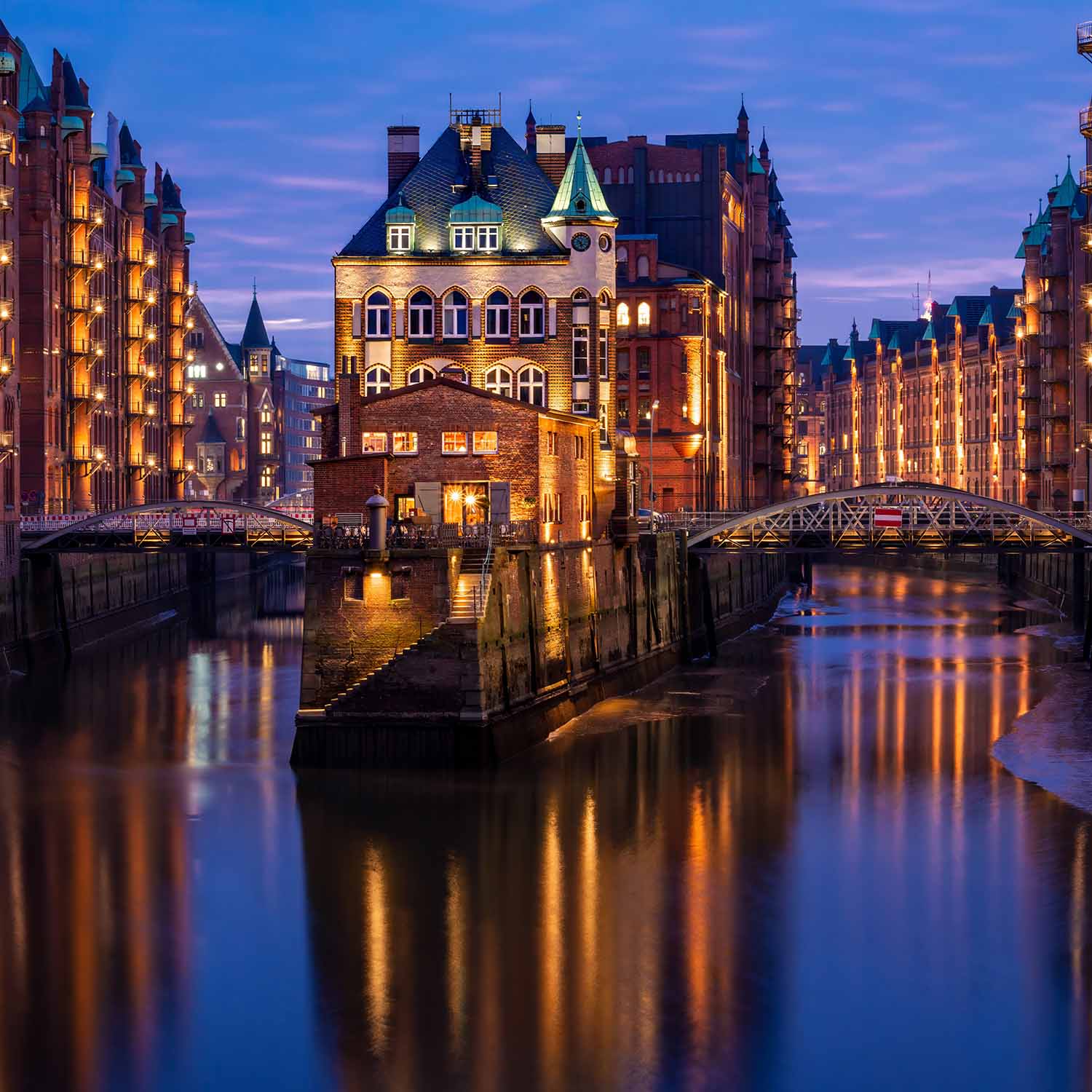
See what we build for Hamburg groups →The 19th-century red-brick warehouse district on the Elbe — now a UNESCO World Heritage Site and Hamburg's most visually distinctive quarter — is the single most reliable wow moment for incoming groups. Evening light on the canal bridges is exceptional. Walking programmes here run 90 minutes comfortably; longer if a waterway crossing by small boat is included. Note: cobblestones and narrow canal paths make wheelchair access limited; plan alternatives for mixed-mobility groups.
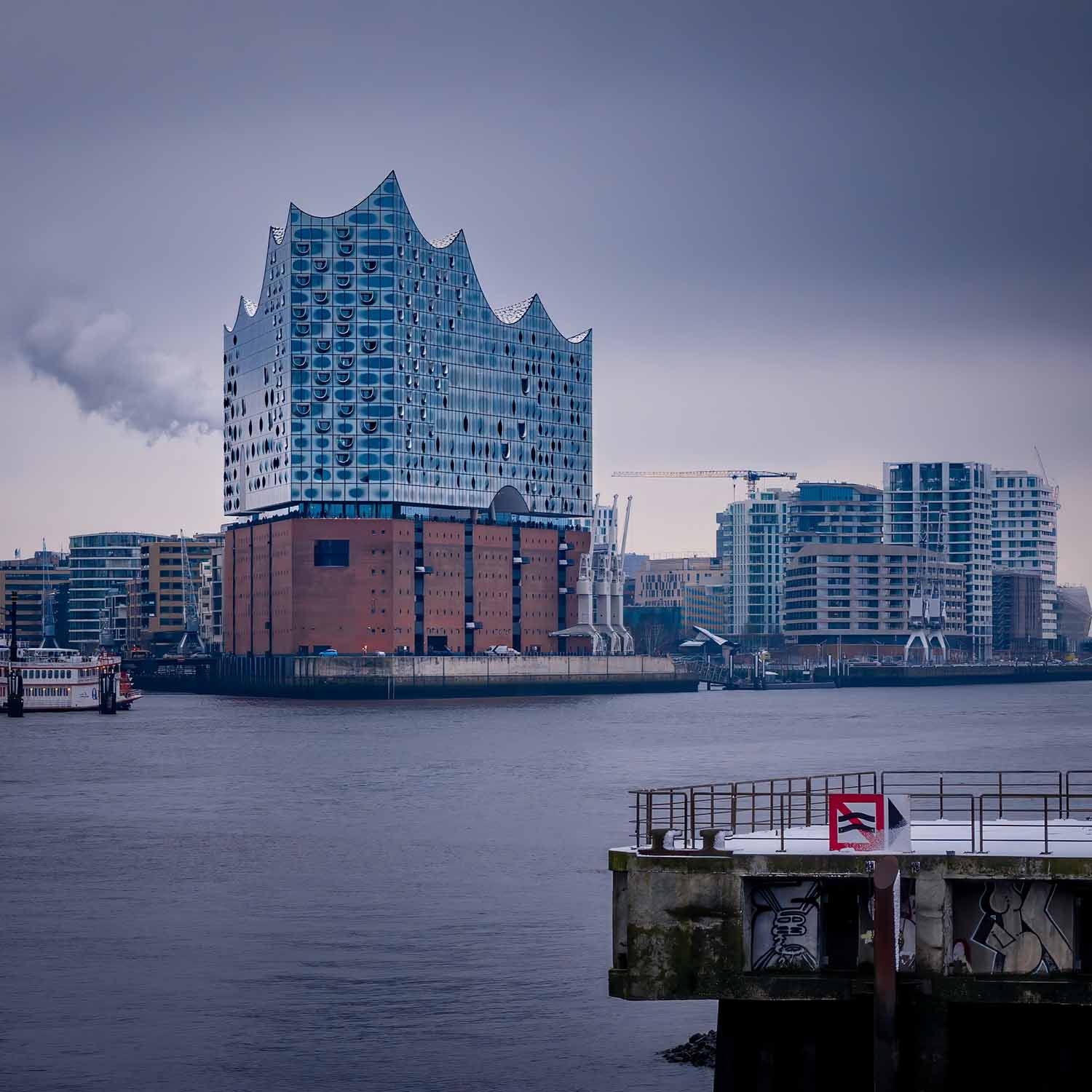
Hamburg's concert hall opened in 2017 and has become one of the most architecturally recognised buildings in Europe. The public viewing platform (Plaza) is free, accessible without pre-booking for groups, and offers a 360-degree harbour view that consistently impresses even city-experienced groups. Private concert tickets for group bookings require significant advance planning — six to twelve months for premium performance dates. Worth knowing early in the itinerary-building phase.
Hamburg's inner lakes — the Binnenalster and Aussenalster — sit at the centre of the city and provide a dramatic orientation point for first-time visitors. Alster boat tours run year-round and offer an accessible, weather-resilient programme option for groups of all types. The Elbe waterfront connects the historic port to HafenCity and provides the backdrop for some of Hamburg's most dramatic evening settings.
The port and St Pauli district give Hamburg a working-city grit that distinguishes it from more polished European capitals. The fish market at dawn, the view of the Köhlbrandbrücke from the Elbe, and the scale of container operations visible from St Pauli — these moments communicate that Hamburg is a city that still works for a living. Appropriate for leisure groups looking for authenticity; less suitable for conservative corporate settings.
Hamburg's neo-Renaissance city hall, completed in 1897, anchors the historic centre. The interior courtyard and main chamber are accessible to groups and provide one of the few genuinely historic interiors the city offers. The surrounding streets — Mönckebergstraße, the Alsterarkaden arcade, the Jungfernstieg promenade — form a logical walking circuit for city-orientation programmes. The Rathaus works as both start and end point for walking tours.
The Sunday morning fish market (open 5am–9:30am, April–October) is one of Hamburg's most atmospheric programme options and genuinely unlike anything available in competitor German cities. The combination of fish vendors, live music, and harbour atmosphere creates a strong group memory. Requires early start and advance planning for logistics. For food and culture themes, the Speicherstadt's coffee roasters and the Portuguese quarter around the Hafenstraße offer alternatives that work on weekday programmes.
May–September offers the best weather and longest daylight hours. Hamburg's cruise season peaks April–October. Christmas market season (November–December) is a strong incentive period with a visually distinct programme calendar. January–March is quiet but can work for cost-sensitive groups if the programme is designed for indoor anchors.
Hamburg Airport (HAM) serves direct routes from major European hubs including London Heathrow, Amsterdam, Paris, Madrid, Barcelona, and Zurich. Hamburg Hauptbahnhof is 90 minutes from Bremen, three hours from Berlin by ICE. The cruise terminal at HafenCity serves 200+ cruise calls per year — relevant for tour operators combining Hamburg with a Baltic or North Sea cruise itinerary.
Hamburg's walking programme venues accommodate groups from 8 to 120 comfortably. Private venue hire for corporate events typically scales from 20 to 300 persons depending on the location. The Elbphilharmonie Plaza accommodates unlimited group visits. Coach parking in HafenCity and the port area has specific access routes; Norte Hamburg coordinates this as standard for all programmes.
What makes Hamburg work for incoming groups is not always what appears in the destination guide. It is knowing that a particular harbour boat has a better onboard atmosphere than the larger-capacity alternatives. It is knowing which food market is worth building a programme around and which has declined in quality. It is understanding that a group of Spanish-speaking executives will respond to the Speicherstadt story differently than a group of British leisure travellers — and adjusting the programme accordingly.
This is the kind of local knowledge that eight years of professional Hamburg guiding produces. And it is what we bring to every programme we design.
Plan your Hamburg programme with a local specialist.